
 Systems Integration and website realized by:
 © copyright 2013 Fondation The Ark
News
Use the wawes of TV and phone to electricity?20.09.2013
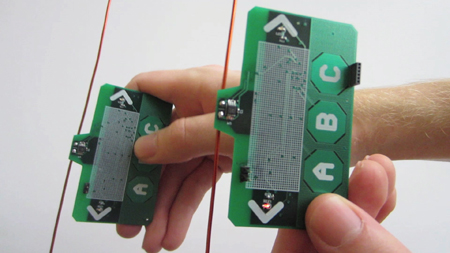
For the Internet of Things - on which the research institutes at TechnoArk in Sierre are working - to become a reality, devices will have to be able to communicate with the Internet and with each other. If they have to be powered up to do so, a lot of electricity will be wasted. That's where a new technology called "ambient backscatter" comes in. Developed by engineers at the University of Washington, it uses existing ubiquitous television and cellular signals to provide the power and media for battery-free communications.
Each device using the ambient backscatter system is equipped with an antenna that picks up television or cellular signals and converts them into electrical energy, which it then uses to reflect a "Morse code" version of that signal. Similar antennas on other devices in turn detect this reflected and coded signal, and can react accordingly. No human intervention is required.
Devices communicate, even when turned offNot only does the technology let devices communicate without being turned on, but it would also allow for things like embedding structural sensors in concrete or other materials, where it would be impossible to access to change the battery - as long as the signals could be reached through the material to their antennas, they could communicate.
Led by Professor Shyam Gollakota, researchers at the University of Washington have added antennas to credit card-sized circuit boards. Each device has a built-in LED that lights up when it has received a signal, but no battery. It was found that pairs of cards placed several centimeters apart could communicate with each other, even up to 10.5 km from the nearest TV transmission tower. The speed at which they could exchange information would have been sufficient to relay data such as sensor readings or SMS.
Using smartphones even with a dead batteryThis, in turn, leads to another possible use for the technology. In the future, smartphones might be able to use ambient TV and cellular signals to transmit text messages, even after their batteries die. In addition, the ambient backscatter beacons on these phones (or something else) could be used to transmit their location if they are moved.